Building lower body power and stability through rope jumping exercises.
Jump rope training is one of those deceptively simple exercises that delivers serious results for anyone willing to put in the time. If you have been watching people at the gym swinging around the heavy bag or standing near the stretching rack doing absolutely nothing, consider yourself inspired to grab a rope instead. This humble piece of equipment builds balance and lower body strength faster than most people expect, all while keeping your heart rate solidly in the aerobic zone. You do not need fancy equipment or a massive workout space — just enough room to swing a rope without hitting the ceiling fan.
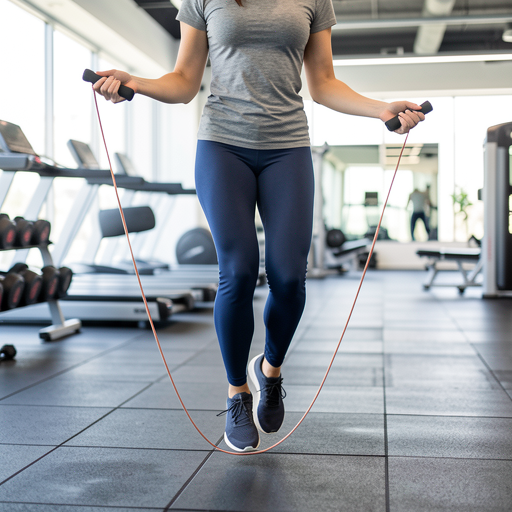
The balance improvements come from the constant micro-adjustments your ankles, knees and hips make with every bounce. You are standing on one foot more often than you realize because proper jump rope form requires slight shifts in weight as the rope passes beneath you. Over time, these tiny corrections train your stabilizing muscles to fire faster and more efficiently. People who practice regularly report better posture, fewer wobbles on uneven surfaces and an overall sense of grounded confidence.
❤️
The feedback loop is immediate: wobble too much and the rope catches your shins, which teaches your body to self-correct in real time. Lower body strength develops naturally through the repetitive impact of landing and pushing off. Your calves absorb and redistribute force with every jump, your quads stabilize the knee joint and your glutes engage to keep your hips aligned. Jump rope sessions feel short but leave your legs humming with fatigue that signals real muscle activation.
🎖️
The beauty of this training is that it progresses at your own pace — you can start with basic two-foot hops and gradually incorporate single-leg variations, lateral skips and higher knees as your strength improves. Each variation targets slightly different muscle groups while still reinforcing the core balance patterns. Getting started does not require perfection. Begin with five-minute sessions three times a week, focusing on consistent rhythm over speed.
🧓🏽
Keep your elbows close to your sides and let your shoulders do the work rather than whipping your arms around like a windmill. Wear supportive shoes and always train on a surface that gives slightly — rubber gym flooring works better than concrete. As your coordination improves, you can extend sessions to ten or fifteen minutes and experiment with different rope heights and jumping patterns. Your legs will thank you, your balance will sharpen noticeably and you will likely find yourself reaching for the rope on days when you would normally skip the gym entirely.