How kneeling exercises, controlled breathing and hip-strengthening movements prepare your body for effective jump rope training
When you step into a workout that challenges your core and hips, the key is finding the right starting position. Stand tall with your feet hip-width apart, then take a slow, deep breath before you lower yourself onto your knees. This simple preparatory moment matters more than you might think. Your hips stay centered, your core stays gently engaged and as you inhale, press upward off your knees using controlled movement. The direction you start your warm-up can make a meaningful difference — walking or jogging in place diagonally works better than going straight forward and if you prefer to jog backward, move deliberately to avoid stumbling. I always recommend a brief cardio warm-up before jumping rope, because getting your heart rate up gradually prepares your joints for the work ahead.
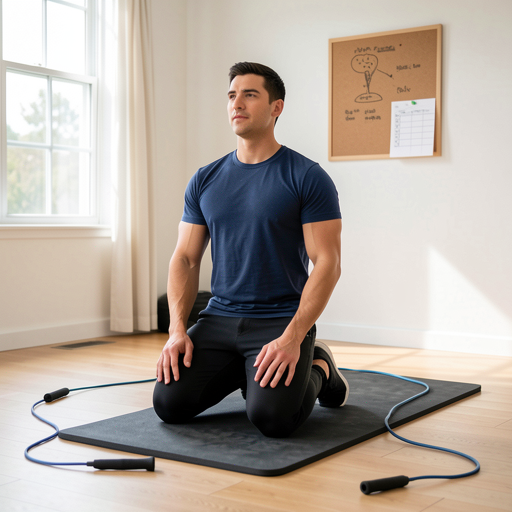
The mechanics of this exercise demand attention to breathing and body positioning. Pull your core inward and press your hips back as you move, keeping your breath steady. You can place your feet on a step, on the floor, or even split them between steps — the choice is yours and that flexibility is what makes this movement adaptable. The important part is maintaining control. As you lower your body back down, let your breath release naturally rather than forcing anything. Drop back into a kneeling position, take another deep breath and repeat with intention. When your heart rate lows down , stretch your hips, shoulders, abs and thighs using the same movements you employed at the start. Hold a plank if you want, then breathe deeply for ten more counts to bring your body back to baseline.
🎖️
Modifications make this exercise accessible to every fitness level. Beginners should place their feet on a chair rather than the floor, allowing you to sit back while keeping your back straight and upright. This reduces the range of motion and takes pressure off your lower back while still engaging your core effectively. More advanced exercisers can keep both feet flat on the floor and stretch their arms straight out in front, as if reaching for a wall, keeping the head down with eyes focused on the ground. These two approaches keep the exercise challenging while respecting what each body needs. Just remember to tap lightly if any part of the movement involves impact — pressing too hard can injure your knees and light, controlled movement always produces better results over time.
⌚
Consistency with movements like these builds real functional strength, especially when combined with a solid cardiovascular routine. If you train regularly, you know that to jump rope effectively, you need strong hips and a stable core. The breathing pattern you use here — inhaling on exertion, exhaling on release — translates directly to better jump rope technique and improved endurance. Start with the beginner modification, progress when you feel ready and never skip the recovery stretches at the end. Your body will thank you and you will notice improvements not just in this exercise, but across every part of your workout. Keep it simple, keep it consistent and let the results follow naturally. A well-structured training jump rope plan builds on this foundation for lasting improvement.
🧜